Abuja real estate and the wilful blindness of law enforcement
May 19, 2025 | By Umar Yakubu
The remedy, in its essence, is uncomplicated. Proving property ownership is simple.
This tide of illicit wealth washing through Abuja’s real estate demands that the relevant agencies resist the insidious embrace of ‘capture’ that renders them impotent. The source of these funds is no mystery; it flows directly from public sector corruption, facilitated by the gaping holes in our procurement processes. They know this. The question that hangs heavy in the air is whether, for once, decisive action will transcend mere rhetoric.
Instead of politicians, let the monkeys govern the countries; at least they will steal only the bananas! – Mehmet Murat ildan
Abuja, Nigeria’s capital, is a city whose identity is inextricably linked with governance. It is the heartland of the nation’s political power, housing the leading political figures, the legislature, the judiciary, and a host of other political actors. By its very nature, Abuja is a city of governance activities; a place where the wheels of political power turn, rather than a hub of bustling economic enterprise.
Yet, a paradox exists. The real estate sector in Abuja continues to boom at an astonishing rate, defying the city’s primary function as a centre of governance. In the last few years, the cost of real estate has been increasing at an highly alarming level, raising questions that demand answers. One cannot help but wonder: Why are houses in Abuja sold for hundreds of millions of naira? Some are priced in millions of dollars! What is fuelling this relentless demand, this insatiable appetite for property in a city that, unlike Lagos or Kano, cannot boast of being a commercial or industrial powerhouse?
Abuja’s allure, it seems, does not lie in its economic vibrancy. Abuja is not a tourist’s dream. While it possesses a few landmarks and cultural sites, it cannot compete with cities that have rich histories, diverse cultural experiences, or natural beauty. The strength of Abuja’s real estate sector defies the conventional drivers of property value.
The Nigerian Financial Intelligence Unit, the Independent Corrupt Practices Commission, the Code of Conduct Bureau, and the Economic and Financial Crimes Commission are supposed to be looking into this, but they seem ineffective. It should be, and it is, easy to investigate and prove beyond reasonable doubt when public officers are living far beyond their means.
The answer, it seems, lies in the concentration of power and wealth. Abuja is where the nation’s elite reside, where political influence is wielded, and where public resources are readily available to the few who have access. The demand for high-value properties is driven by those with no verifiable means of income, for, legitimately, no public officer justifiably makes N100 million per annum. Then, why are public officers allegedly the ones predominantly buying these outrageously expensive properties and keeping the prices high? And why is nothing being done to curb this?
The Nigerian Financial Intelligence Unit, the Independent Corrupt Practices Commission, the Code of Conduct Bureau, and the Economic and Financial Crimes Commission are supposed to be looking into this, but they seem ineffective. It should be, and it is, easy to investigate and prove beyond reasonable doubt when public officers are living far beyond their means. Politicians are now openly handing out billions in their constituencies on camera, and no one is bothering to ask them where the money is originating from.
This has serious consequences, forcing us to question the very foundation of our governance and how wealth is distributed in Nigeria. Is it sustainable for a city to thrive primarily on political power and its associated wealth? Can a city truly prosper when its real estate sector is driven by factors disconnected from genuine economic activity?
The remedy, in its essence, is uncomplicated. Proving property ownership is simple. Yet, within the space where the political elite exhibits an insatiable appetite for seizing the very institutions designed to restrain their excesses, verification of property ownership appears to have become rocket science.
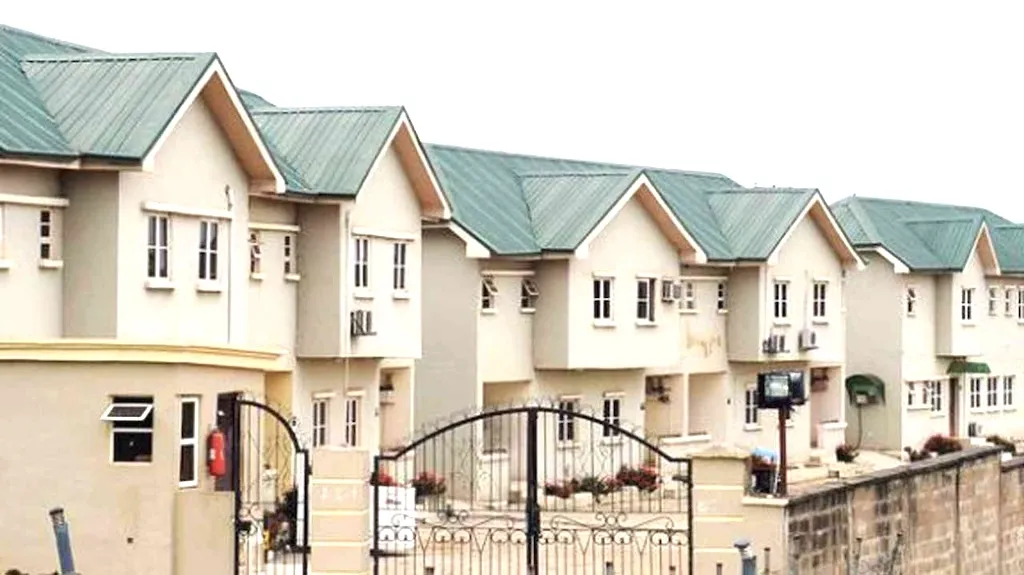
Legitimate business minds don’t lock up capital in brick and mortar. Those who genuinely understand the nature of business do not bury their capital. They invest where it will yield profit. But Abuja defies this basic principle. We are faced with the irrationality of billions tied up in houses that remain unoccupied. Hundreds of houses in estates stand empty, their prices set at levels that guarantee vacancy, while their owners display a baffling indifference to this lack of occupancy. Even in the Central Business District, properties sit idle.
The remedy, in its essence, is uncomplicated. Proving property ownership is simple. Yet, within the space where the political elite exhibits an insatiable appetite for seizing the very institutions designed to restrain their excesses, verification of property ownership appears to have become rocket science. The Independent National Electoral Commission, we are told, has already fallen prey. The judiciary, too, stands accused of being compromised. And the Bureau of Public Procurement? Its efficacy is clearly undermined, hence the ‘why’ of our present predicament.
This tide of illicit wealth washing through Abuja’s real estate demands that the relevant agencies resist the insidious embrace of ‘capture’ that renders them impotent. The source of these funds is no mystery; it flows directly from public sector corruption, facilitated by the gaping holes in our procurement processes. They know this. The question that hangs heavy in the air is whether, for once, decisive action will transcend mere rhetoric.
Umar Yakubu writes from Abuja.